
Understanding Wig Lace Types: Swiss Lace, French Lace, HD Lace and Transparent Lace
Lace is an important component of many wigs and hairpieces, influencing their appearance, hairline design, comfort and durability. However, terms such as Swiss lace, French lace, HD lace and transparent lace are not always used consistently across manufacturers. This guide explains their common characteristics, clarifies the differences between material descriptions and marketing terms, and outlines key points B2B buyers should evaluate when sourcing lace wigs and hairpieces.
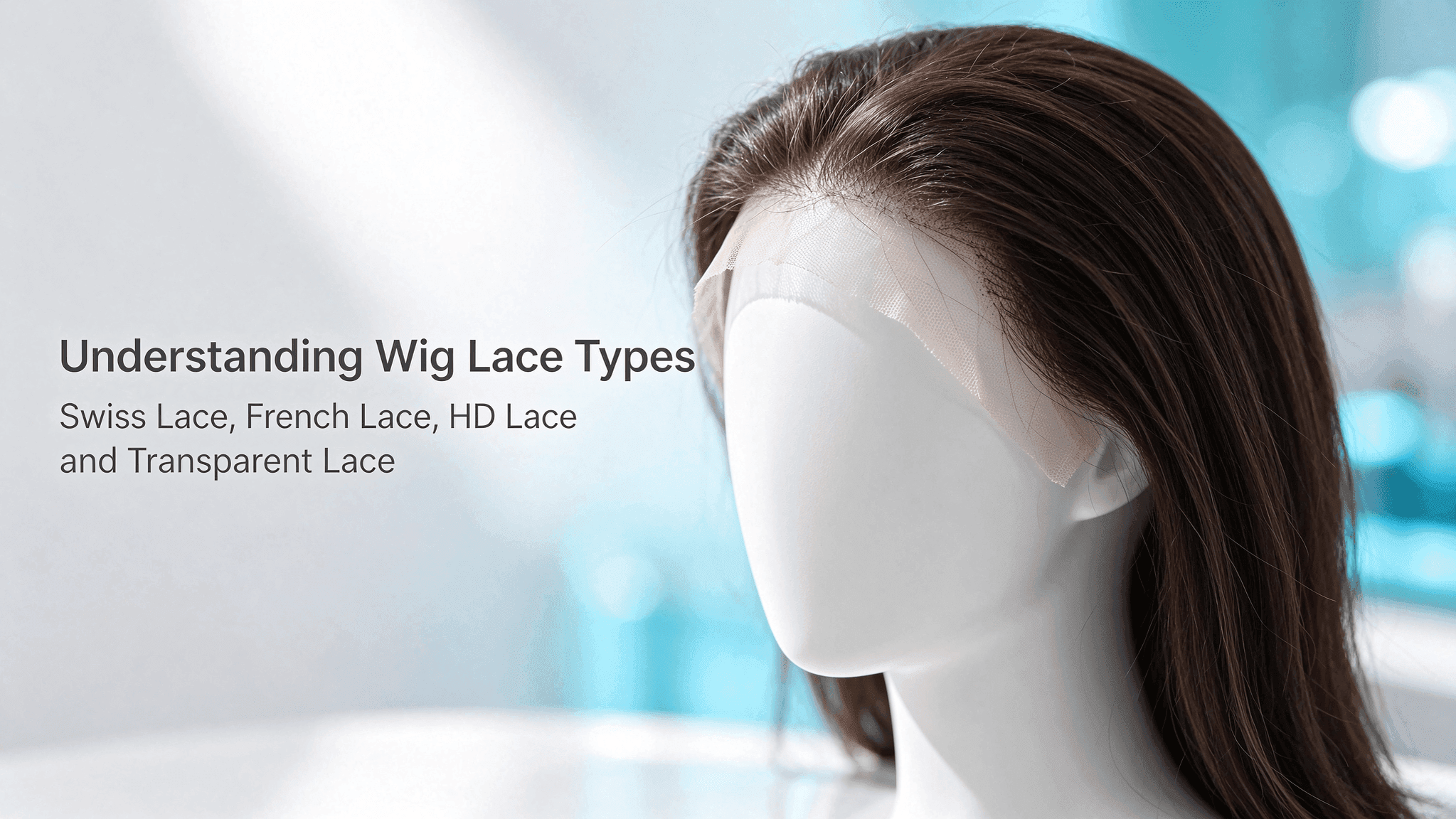
Lace plays an important role in the construction of lace wigs, lace front wigs, toppers and certain hairpieces. It provides a base for attaching individual hair strands while helping create a natural-looking scalp and hairline.
For wholesale buyers, importers and wig brands, understanding different lace types is essential when selecting products for different customer groups. Lace can vary in appearance, thickness, flexibility, strength and color. These differences may affect the final product's look, wearing experience and maintenance requirements.
However, lace terminology is not always standardized across the industry. Two manufacturers may use the same product name for materials with different specifications. Therefore, buyers should evaluate the actual lace construction rather than relying on the name alone.
1. What Is Wig Lace?
Wig lace is a fine mesh material used as the base of certain wigs and hairpieces. Individual strands of hair are attached to the mesh, commonly through ventilation or knotting techniques.
Depending on the product design, lace may be used in different areas:
- Lace front: Lace is placed along the front hairline to create a more natural-looking hairline.
- Full lace: Lace forms the main base of the wig, allowing greater flexibility in styling and parting, depending on the construction.
- Lace closure: A smaller lace section is used to cover a specific parting area.
- Lace topper: Lace may be incorporated into the base of a hair topper to create a natural-looking part or scalp area.
The type and placement of lace should match the intended hairstyle, product structure and target customer requirements.
2. Common Types of Wig Lace
Different lace names are used to describe the material, texture, appearance or marketing category of a lace product. The following are common descriptions in the wig industry.
2.1 Swiss Lace
Swiss lace is commonly associated with a fine, lightweight and relatively soft mesh structure.
Its characteristics may include:
- A fine mesh appearance.
- A relatively lightweight feel.
- Flexibility that can help the lace conform to the scalp.
- A delicate structure that requires careful handling.
Swiss lace is often used in products where a lightweight base and natural-looking hairline are important.
However, the actual thickness, softness and strength can vary depending on the manufacturer and the specific material used.
2.2 French Lace
French lace is generally described as having a slightly more substantial mesh structure than finer lace options.
Common characteristics may include:
- A relatively firm structure.
- Greater resistance to handling in some constructions.
- A mesh appearance that may be more visible than very fine lace.
- A balance between flexibility and structural support.
French lace may be considered for products where buyers want a lace base with a more substantial feel. However, its performance depends on mesh construction, material quality and manufacturing methods.
2.3 HD Lace
HD lace, short for high-definition lace, is commonly marketed as an extremely thin and fine lace designed to blend discreetly with the skin.
Its commonly promoted features include:
- A very fine mesh appearance.
- A lightweight structure.
- A discreet appearance when properly matched to the wearer.
- A delicate base that may require careful handling.
It is important to understand that HD lace is not a universally defined technical material category. Different manufacturers may use the term for different lace materials and specifications.
Buyers should therefore request physical samples and confirm the actual mesh characteristics rather than assuming that all products labeled HD lace are identical.
2.4 Transparent Lace
Transparent lace generally refers to lace with a light or translucent appearance rather than a specific standardized mesh construction.
Its purpose is to reduce the visual contrast between the lace and the wearer's skin when the color is suitable.
Common characteristics include:
- A light or translucent appearance.
- Potential suitability for different skin tones, depending on the exact shade and application.
- Different thicknesses and mesh structures depending on the manufacturer.
Transparent lace should not automatically be considered the same as HD lace. A lace product can be transparent in color without necessarily having the same thinness or fine mesh structure associated with HD lace.
3. Comparison of Common Lace Types
The following table summarizes commonly described characteristics. These are general industry descriptions rather than universal technical standards.
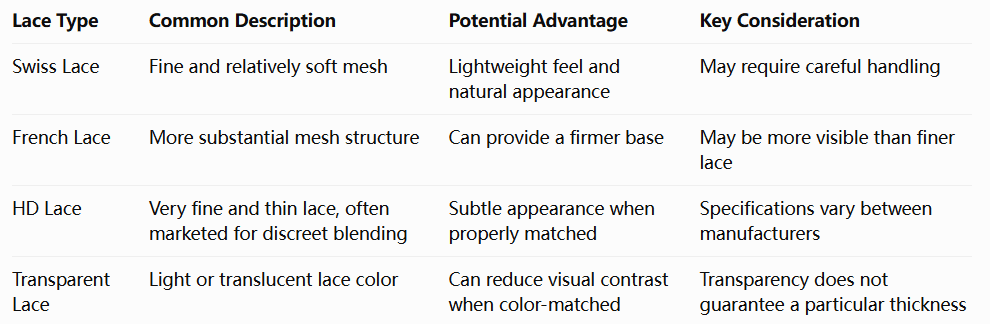
For B2B buyers, the most important point is that these names do not always represent directly comparable material specifications. A supplier's sample, technical description and actual product construction should be considered together.
4. How Lace Type Affects Wig Performance
Lace selection can influence several aspects of the finished wig or hairpiece.
4.1 Natural-Looking Hairline
The fineness, color and visibility of lace can affect how naturally the front hairline appears.
A fine mesh may be less noticeable under suitable lighting and when properly matched to the wearer. However, the final result also depends on knot size, hair density, hairline design, lace color and application method.
4.2 Comfort and Flexibility
The softness and flexibility of lace can affect how the base feels against the scalp.
A flexible mesh may adapt more easily to the shape of the head, while a firmer structure may provide more support. Comfort also depends on cap construction, base size, fit and the wearer's sensitivity.
4.3 Durability and Maintenance
Very fine lace may create a delicate, lightweight base, but it can also require more careful handling.
Factors affecting durability include:
- Mesh strength and construction.
- Quality of the lace material.
- Knotting and ventilation quality.
- Hair density and tension on the base.
- Daily wearing, cleaning and styling habits.
It is not accurate to assume that every fine lace product is fragile or that every thicker lace product is highly durable. Actual performance should be assessed through product testing.
5. What Should Wholesale Buyers Check When Sourcing Lace Wigs?
When comparing lace products from different manufacturers, buyers should look beyond product names and focus on measurable or observable details.
1. Lace material and specifications
Ask the manufacturer to clarify the material, mesh structure, thickness and any available technical specifications. Confirm whether terms such as HD lace or Swiss lace refer to a particular material or simply a product category.
2. Lace color
Check the actual lace color under neutral lighting. If products are intended for different customer groups, ask whether alternative shades are available.
3. Mesh fineness and visibility
Examine the mesh closely and assess how visible it appears against different skin tones. If possible, compare samples under natural and indoor lighting.
4. Knotting and ventilation
Inspect how the hair is attached to the lace. Look for consistent knotting, secure hair attachment and an even distribution of strands.
5. Hairline and parting design
Check whether the hairline looks natural and whether the parting area meets the intended styling requirements. Lace quality alone does not determine the final appearance.
6. Handling and durability
Evaluate how the lace responds to gentle handling and normal product use. For repeat orders, confirm that the supplier can maintain consistent specifications between production batches.
6. Questions to Ask Before Placing a Bulk Order
Clear communication with manufacturers can help reduce misunderstandings and product inconsistencies.
Wholesale buyers may ask:
- What specific lace material is used in this product?
- Is the lace available in different colors or thicknesses?
- What is the difference between the manufacturer's HD lace and Swiss lace options?
- Can the same lace specification be maintained for repeat orders?
- Are custom hairlines or parting designs available?
- Can the manufacturer provide samples for evaluation before bulk production?
It is also useful to keep approved samples and written product specifications as references for future orders.
7. Final Thoughts
Swiss lace, French lace, HD lace and transparent lace are commonly used terms in the wig industry, but they do not always describe standardized or directly interchangeable materials.
For B2B buyers, the best approach is to evaluate the actual mesh structure, color, thickness, flexibility, hair attachment and overall product performance. A lace type that works well for one wig design or customer group may not be the best choice for another.
By comparing samples and confirming specifications with manufacturers, buyers can make more informed sourcing decisions and improve product consistency across their collections.