
Knot Bleaching in Lace Wigs: Process, Benefits, and Quality Inspection
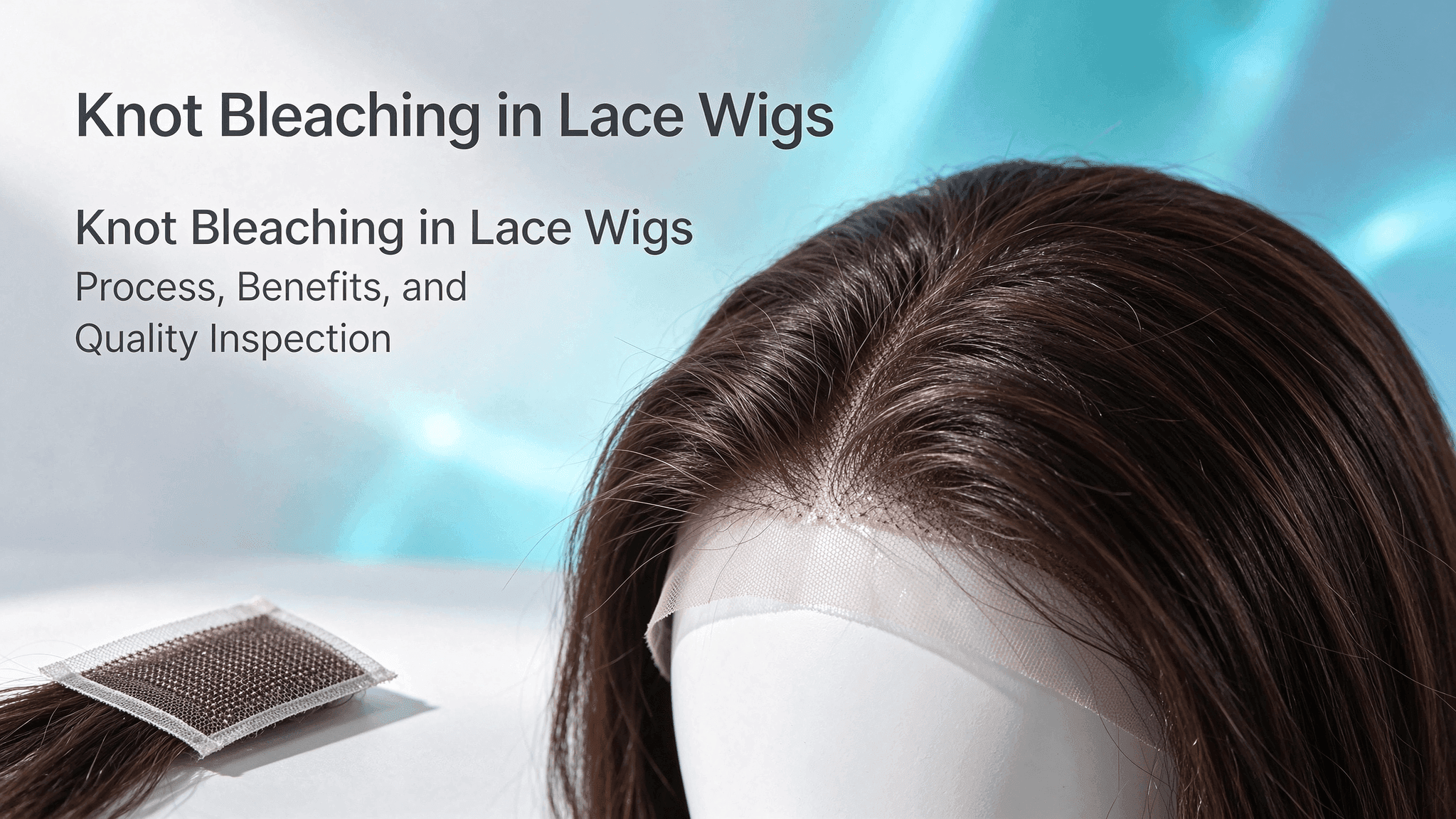
Knot bleaching is a finishing technique used in some lace wigs to reduce the visibility of the knots where individual hairs are attached to the lace. When performed properly, it can create a more natural-looking scalp effect, particularly around the hairline and parting areas. However, the process must be carefully controlled because excessive chemical treatment may affect hair strength and product durability. This guide explains how knot bleaching works, its benefits and limitations, and what wholesale buyers should check when evaluating lace wig samples.
1. What Is Knot Bleaching?
Knot bleaching is a chemical finishing process used in certain lace wigs to lighten the small knots that secure individual hairs to the lace base.
During the hair ventilation process, individual hairs are attached to the lace by tying them into small knots. These knots can sometimes appear as tiny dark dots, especially when the hair color is dark and the lace is light or transparent.
Knot bleaching helps reduce the contrast between the knots and the surrounding lace, making the base look more similar to the scalp.
It is important to understand that knot bleaching does not remove the knots or change the basic ventilation structure. Instead, it lightens their appearance through chemical treatment.
Not all lace wigs require bleached knots. Whether this finish is suitable depends on the product design, hair color, lace material, target customer preferences, and manufacturer's production process.
2. How Does the Knot Bleaching Process Work?
The exact procedure may vary between manufacturers, but the general process involves treating the knots on the lace side of the wig with a suitable lightening product.
A typical workflow may include the following stages:
Step 1: Preparing the Lace Wig
Before treatment, the wig is checked to identify the areas where knots are visible and where bleaching is required.
The lace and surrounding hair should be handled carefully to avoid unnecessary damage during the process.
Step 2: Applying the Bleaching Product
A lightening mixture is applied to the knot areas, usually from the underside of the lace.
The objective is to lighten the knots without unnecessarily affecting the surrounding hair or lace.
Step 3: Controlling the Processing Time
The treatment must be monitored carefully. The appropriate processing time depends on several factors, including the hair's original color, the bleaching formulation, the knot characteristics, and the manufacturer's process.
Excessive treatment may weaken the hair around the knots or affect the lace and surrounding materials.
Step 4: Rinsing and Cleaning
After the desired lightening effect is achieved, the treatment product is thoroughly removed according to the manufacturer's procedure.
Proper cleaning is important to avoid leaving chemical residues on the lace or hair.
Step 5: Inspecting the Finished Product
The finished wig should be checked for knot visibility, hair condition, lace integrity, and any signs of uneven treatment.
The objective is to achieve a more natural-looking base while maintaining the product's structural quality.
3. Main Benefits of Knot Bleaching
3.1 A More Natural-Looking Scalp Effect
Dark knots can sometimes be visible through light-colored lace, creating the appearance of small dots on the scalp.
Lightening the knots can reduce this contrast and help the lace area look more natural.
3.2 Improved Appearance Around the Parting Area
For wigs with visible parting sections, knot bleaching may help create a cleaner scalp-like appearance.
This can be particularly relevant for products designed to offer a realistic parting effect.
3.3 Enhanced Hairline Presentation
The knots near the front hairline may be noticeable when the lace is exposed.
When properly treated, lighter knots can help reduce their visibility and improve the overall appearance of the hairline.
However, knot bleaching is only one factor in hairline quality. Ventilation technique, hair distribution, hairline design, and lace characteristics are also important.
4. Potential Limitations and Quality Risks
Although knot bleaching can improve the appearance of lace wigs, it is not a process that should be applied without considering its potential effects.
4.1 Excessive Bleaching May Weaken Hair
Chemical lightening can affect hair structure. If the treatment is too strong or continues for too long, the hair around the knots may become weaker.
This can increase the risk of breakage or shedding around the attachment points.
The actual impact depends on the hair condition, chemical formulation, and processing conditions.
4.2 Knots May Still Be Visible
Bleaching does not guarantee completely invisible knots.
The final appearance depends on factors such as:
- Original hair color
- Knot size and structure
- Lace color and transparency
- Bleaching effectiveness
- Lighting conditions and viewing angle
For this reason, terms such as "invisible knots" should be evaluated carefully rather than treated as a guaranteed technical result.
4.3 Uneven Treatment Can Affect Appearance
If the treatment is not evenly controlled, some knots may appear lighter than others.
Uneven results can make the lace base look inconsistent, particularly in exposed parting areas.
4.4 Not Every Product Requires Bleached Knots
Some customers may prefer unbleached knots, depending on their styling requirements, product design, or concerns about chemical processing.
For certain products, leaving the knots untreated may be a suitable option.
Buyers should confirm the required finish rather than assuming that bleached knots are always the preferred choice.
5. Bleached Knots vs. Unbleached Knots
Understanding the difference between bleached and unbleached knots helps buyers select the right product specifications.
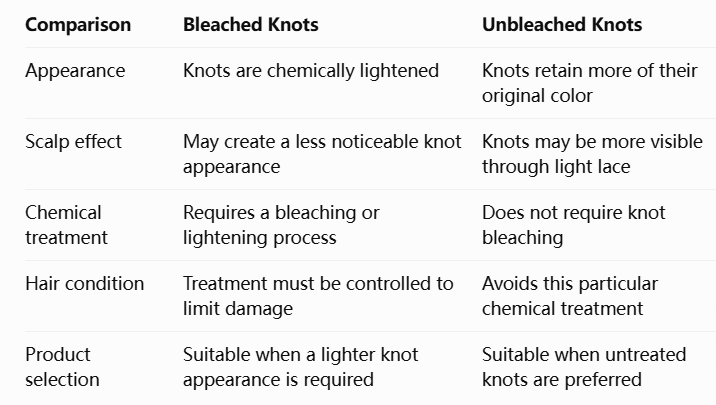
Neither option is automatically better in every situation. The choice should depend on the product's intended appearance, customer expectations, and quality requirements.
6. How Should Wholesale Buyers Inspect Bleached Knots?
For B2B buyers, evaluating knot bleaching should involve more than checking whether the knots look light.
The following inspection points can help assess the finished product.
6.1 Check Knot Visibility
Examine the lace from different angles under natural or neutral lighting.
Pay attention to the front hairline and parting areas, where knot visibility can have a greater impact on appearance.
6.2 Look for Uneven Bleaching
Check whether the knots have been treated consistently across the lace area.
Noticeable differences in color between neighboring knots may indicate uneven processing.
6.3 Inspect Hair Condition Around the Knots
Look for signs of excessive processing, such as weakened-looking hair near the attachment points.
A gentle handling check may help identify obvious problems, but aggressive pulling should be avoided because it can damage the sample and does not represent normal use.
6.4 Check Lace Integrity
Inspect the lace for discoloration, damage, weakened areas, or visible chemical residue.
The lace should remain suitable for its intended use after finishing.
6.5 Evaluate the Finished Appearance
Look at the wig as a complete product rather than judging knot bleaching in isolation.
Hairline design, ventilation, density, lace color, and overall construction all contribute to the final appearance.
7. Questions to Ask Manufacturers Before Ordering
Before placing a bulk order, wholesale buyers should confirm the following details with the manufacturer:
1. Are the knots bleached or unbleached in the standard product specification?
2. Which areas of the lace receive knot bleaching?
3. What level of knot lightening can be expected for the selected hair color?
4. How does the manufacturer control the treatment to protect hair strength?
5. Can the manufacturer provide close-up photos of the knots and parting area?
6. Will the bulk order follow the same knot treatment as the approved sample?
7. Is an unbleached-knot option available if required?
These questions help buyers establish clear expectations and reduce differences between approved samples and bulk production.
Conclusion
Knot bleaching is an important finishing technique for certain lace wigs because it can reduce the visibility of ventilation knots and create a more natural-looking scalp effect.
However, the result depends on the hair color, knot structure, lace material, and treatment process. Excessive or uneven chemical treatment may affect hair condition and product appearance.
For wholesale buyers, the best approach is to inspect actual samples, evaluate both knot visibility and hair integrity, and confirm the required finishing specifications before bulk production. A well-balanced result should provide a natural appearance without compromising the overall quality of the wig.