
How to Evaluate Wig Density: A Practical Guide for Wholesale Buyers
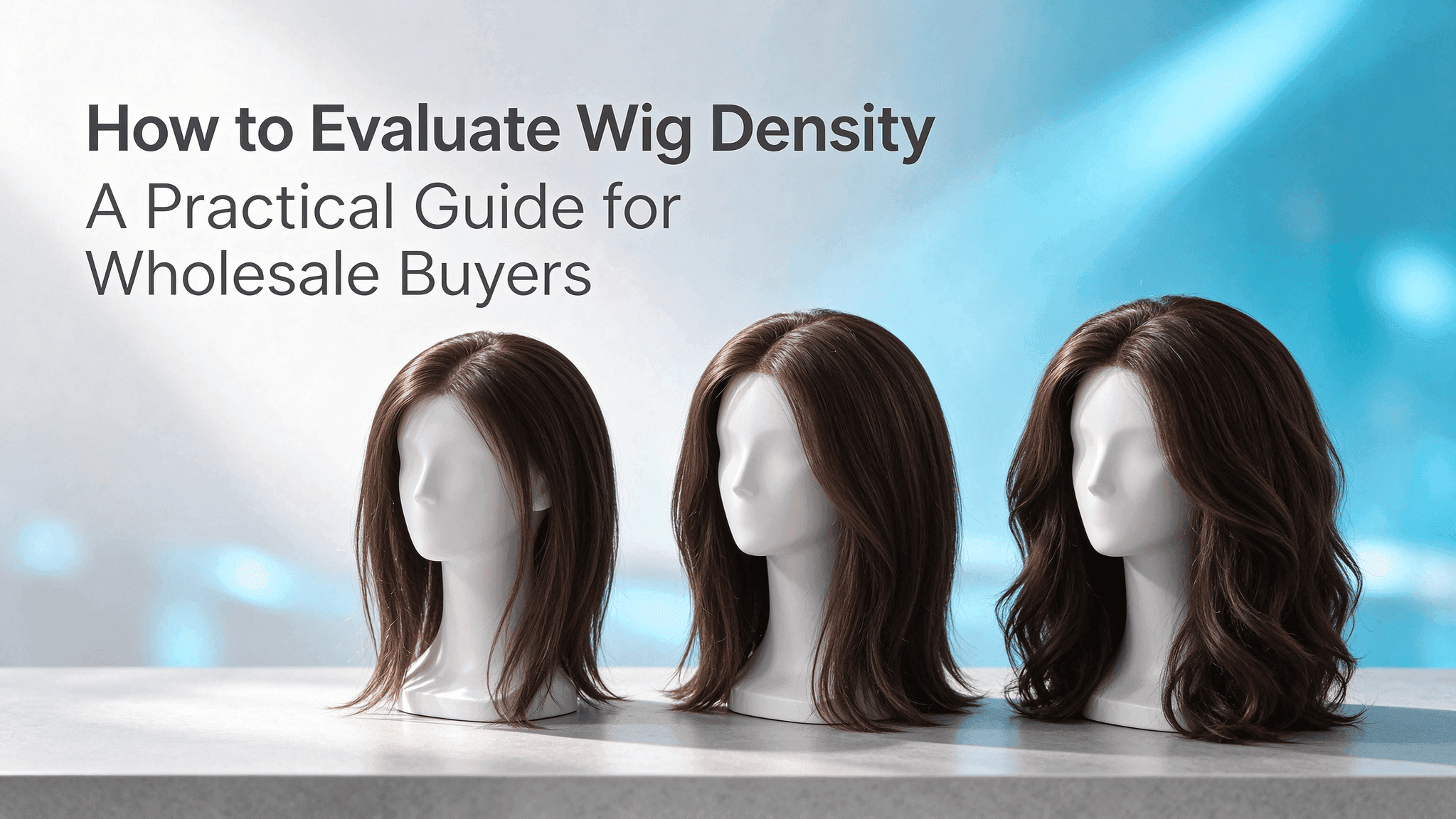
Wig density is an important factor in determining a wig's overall appearance, fullness, weight, and styling possibilities. However, density percentages are not always defined or measured in the same way by different manufacturers. This guide explains what wig density means, what affects its visual appearance, and how wholesale buyers can evaluate density more accurately when comparing products and placing orders.
1. What Does Wig Density Mean?
Wig density refers to how much hair is used in a wig or hairpiece, particularly how densely the hair is distributed across its base or cap.
It is commonly expressed as a percentage, such as 130%, 150%, 180%, or 200%. These figures are commercial reference labels used by manufacturers to describe the fullness of a wig.
In general:
Lower-density wigs tend to have a lighter, less voluminous appearance.
Medium-density wigs offer a balance between natural-looking fullness and volume.
Higher-density wigs usually create a fuller and more voluminous appearance.
However, density percentages should not be treated as universal technical measurements. There is no single measurement method or industry-wide standard that guarantees the same visual result across all suppliers.
2. Common Wig Density Levels
Different manufacturers may use slightly different density categories. The following descriptions are general purchasing references rather than fixed industry standards.
130% Density
A 130% density wig generally has a relatively light and natural-looking appearance. It may be suitable for customers who prefer less volume or a style that resembles naturally fine to medium-density hair.
150% Density
A 150% density wig is often positioned as a medium-density option. It can provide noticeable fullness without creating an excessively voluminous look.
180% Density
An 180% density wig typically offers a fuller appearance than 150% density. It may be suitable for customers who prefer more body, volume, or styling flexibility.
200% Density and Above
Higher-density wigs are generally designed to create a noticeably full and voluminous look. They may require more hair material and can feel heavier, depending on the cap construction, hair length, and hair characteristics.
Important: These descriptions are approximate. A wig labeled 150% by one manufacturer may not look exactly the same as a 150% wig from another manufacturer.
3. What Affects the Visual Appearance of Wig Density?
Density is not the only factor that determines how full a wig looks. Buyers should consider several characteristics together.
Hair Length
Longer hair can appear less full at the ends because the hair is distributed over a greater length. A long wig and a short wig with the same labeled density may therefore create different visual impressions.
Hair Texture
Curly and wavy hair can appear fuller because the texture creates more visual volume. Straight hair may look less voluminous even when the amount of hair used is similar.
Hair Color
Hair color can also influence the perception of fullness. Different shades, highlights, and color contrasts may make the hair appear more or less visually dense.
Hair Distribution
The way hair is distributed across the cap or base matters. Density around the crown, sides, and back can affect the overall silhouette and styling result.
Cap Construction
The cap structure, ventilation pattern, lace area, and hair attachment method can all influence how the finished wig looks and feels.
For example, a wig with a natural-looking hairline and a carefully designed parting area may create a different visual effect from one with uniform hair distribution.
4. How Should Wholesale Buyers Evaluate Wig Density?
Relying only on the density percentage shown in a product listing is not enough. Buyers should use several practical checks when evaluating samples or comparing suppliers.
Compare Samples Under Similar Conditions
When comparing two wigs, try to keep the following factors as consistent as possible:
Hair length
Hair texture
Hair color
Cap construction
Styling condition
Otherwise, differences in appearance may come from factors other than density.
Check Hair Distribution
Look at the crown, sides, back, and parting area. Check whether the hair distribution matches the intended style and whether there are areas that appear noticeably thinner than expected.
Evaluate the Hairline and Parting
For lace wigs and other products with visible parting areas, examine whether the hairline and parting look natural. A high overall density does not automatically mean that the hairline or parting area will look realistic.
Consider Weight and Wearability
Higher density may increase the amount of hair used and the overall weight of the product. Buyers should consider whether the finished wig is comfortable and appropriate for its intended customers.
Request Consistent Product Specifications
When ordering in bulk, ask the manufacturer to confirm the density reference used for the sample and the production order. It is also helpful to request reference photos or videos under consistent lighting and styling conditions.
5. Questions to Ask Before Placing a Bulk Order
To reduce misunderstandings between buyers and manufacturers, consider confirming the following details:
What density options are available for this specific wig style?
How does the manufacturer define or measure each density level?
Is the density distributed evenly, or is it designed to be fuller in specific areas?
Does the density specification change with different hair lengths?
Will bulk production follow the same density reference as the approved sample?
Can the manufacturer provide photos or videos showing the finished product from multiple angles?
These questions help buyers establish clearer expectations before production begins.
6. Common Mistakes When Choosing Wig Density
Choosing Density Based on Percentage Alone
A higher percentage does not automatically mean better quality. The right density depends on the target hairstyle, customer preferences, hair characteristics, and product positioning.
Ignoring Hair Length and Texture
Two wigs with the same density label can look very different if one is long and straight while the other is short and curly.
Assuming Every Supplier Uses the Same Standard
Density labels are not necessarily standardized across manufacturers. Buyers should compare actual samples and confirm each supplier's specifications.
Overlooking the Intended Customer
A very full wig may be suitable for customers who prefer dramatic volume, but it may not meet the expectations of customers looking for a lightweight and natural appearance.
Conclusion
Wig density is an important purchasing specification, but it should never be evaluated in isolation. Hair length, texture, color, distribution, and cap construction all influence the final appearance and wearing experience.
For wholesale buyers, the most reliable approach is to compare samples under similar conditions, understand each manufacturer's density definitions, and confirm the agreed specifications before bulk production. Clear communication helps reduce product inconsistencies and supports better purchasing decisions.