
How to Distinguish Human Hair Wigs and Synthetic Wigs for Wholesale Buyers
Learn practical ways to tell human hair wigs apart from synthetic wigs. Help you check wig quality and avoid mistakes when placing bulk orders.
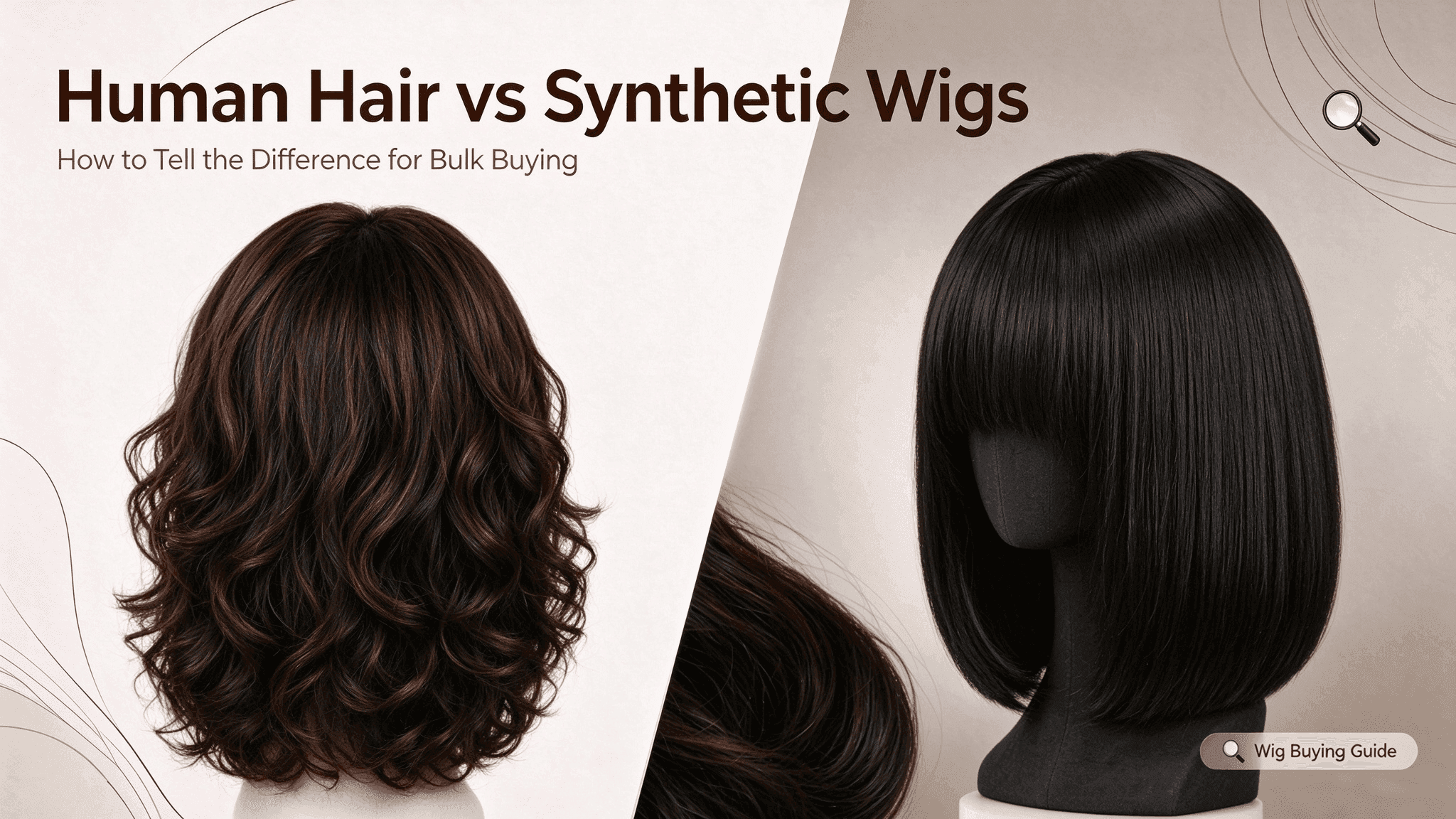
If you are a wig wholesaler, salon owner or online store seller, being able to tell the difference between human hair wigs and synthetic wigs is one of the most basic and essential skills. Mixing them up will cause complaints from your customers and hurt your business reputation.
Human hair wigs are made from real donor hair. They can be curled, straightened, dyed and bleached freely just like our natural hair. They look more natural, have better breathability and usually have a longer service life. But the price is higher, and they need more careful daily maintenance.
Synthetic wigs are made from chemical fiber. They keep the preset style after washing and do not need much styling. They are cheap and easy to manage, but they cannot withstand high heat. They will melt or deform if you use a high-temperature flat iron or curling wand. Also, synthetic fiber cannot be dyed into new colors.
Here are 4 simple test methods you can use when checking samples:
1. Burning Test
Take a small strand of hair and burn it. Real human hair burns slowly, smells like burning protein, similar to burning chicken feathers. The ash is fragile and can be crushed into powder between your fingers. Synthetic fiber burns quickly, melts into sticky black droplets, gives off a strong plastic smell, and leaves hard lumps after burning.
⚠️ Note: Do the burning test only on spare hair samples, never test on finished wig products.
2. Heat Resistance Test
Use a low-temperature hair iron on a tiny hidden section. Human hair can take heat styling. Synthetic fiber will shrink, curl abnormally or melt under high heat.
3. Touch & Look
Human hair has uneven thickness, just like natural hair. You can see slight color differences along the strands. Synthetic hair looks overly uniform, shiny and plastic-like.
4. Water & Wet Test
When wet, human hair becomes softer and can be combed smoothly. Synthetic fiber keeps its stiff texture and is harder to restyle after getting wet.
Which one should you choose for your market?
- Human hair wigs: suitable for high-end salons, customers who want frequent styling, dyeing and long-term use. Main markets include the United States and Europe.
- Synthetic wigs: great for fashion quick styles, party wigs, budget retail and mass markets in Southeast Asia and Africa.
Many suppliers sell mixed hair wigs, which blend human hair and synthetic fiber to cut costs. You should ask your factory clearly about the hair composition before confirming bulk orders.
Mastering these identification skills helps you inspect goods, communicate with your customers and select the right wig types for your target market.