
Glueless Wigs Explained: Construction, Features and a Wholesale Buyer's Guide
Glueless wigs have become an increasingly popular product category as consumers look for convenient alternatives to traditional adhesive-based wig installation. Designed with features such as adjustable straps, elastic bands, combs and specialized cap constructions, these wigs can offer a more straightforward wearing experience without requiring wig glue for everyday use. This guide explains how glueless wigs are constructed, what features distinguish them from traditional lace wigs, and what wholesale buyers should evaluate before placing bulk orders.
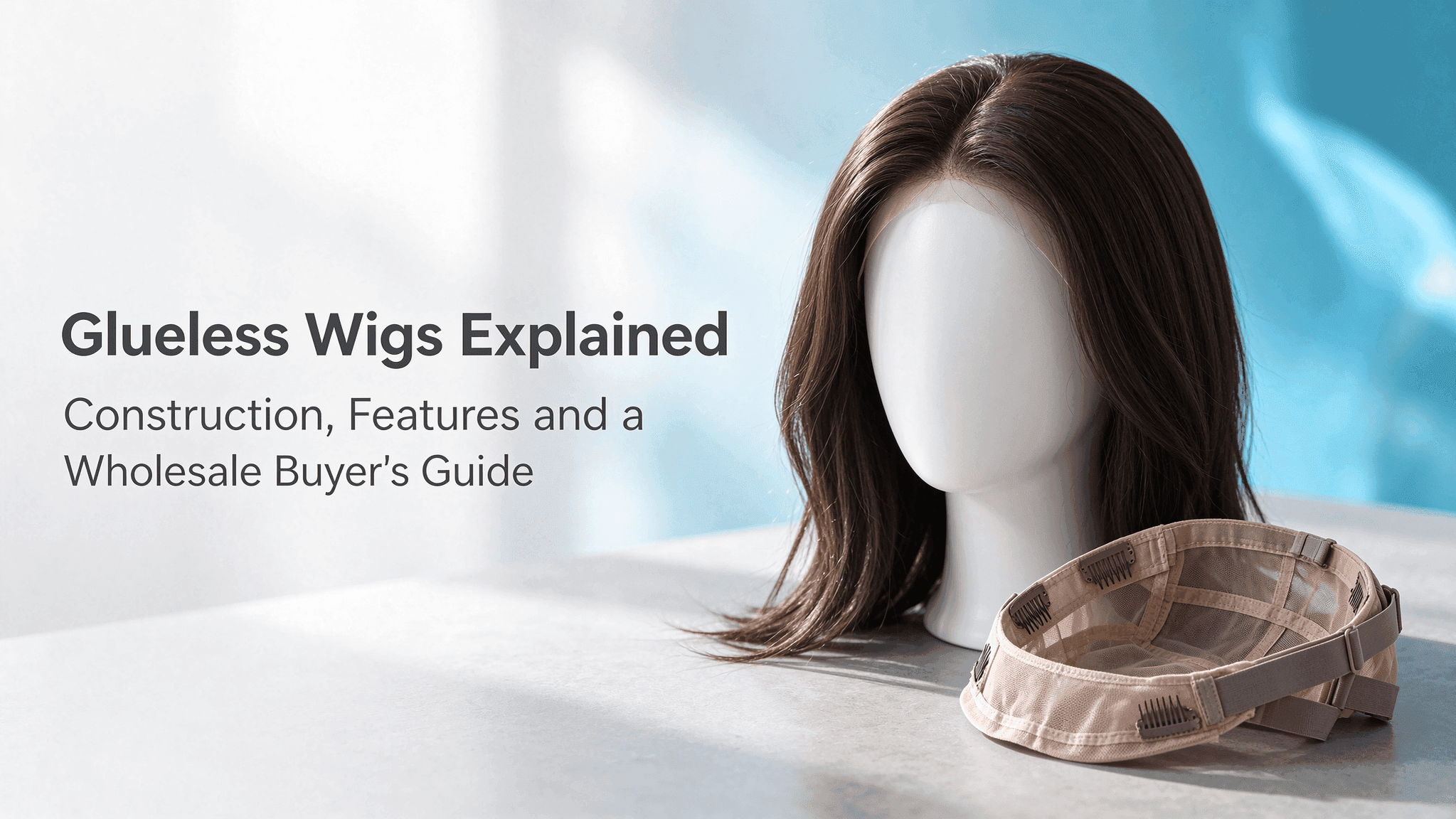
Glueless wigs are designed to simplify the wig-wearing process by reducing or eliminating the need for adhesive products during everyday installation.
Unlike traditional lace wigs that may rely on wig glue or tape for secure attachment, glueless wigs generally use a combination of adjustable straps, elastic bands, combs, grip features and cap construction to help keep the wig in position.
As consumers increasingly value convenience, flexibility and natural-looking results, glueless designs have become an important category for wig manufacturers, wholesalers and retailers.
For B2B buyers, understanding how these products are constructed is essential when comparing manufacturers, evaluating samples and selecting suitable products for different customer groups.
1. What Is a Glueless Wig?
A glueless wig is a wig designed to be worn without requiring adhesive products such as wig glue or tape as its primary fastening method.
Instead, the wig uses built-in structural features to help secure it on the head.
Common features include:
- Adjustable elastic straps.
- Internal elastic bands.
- Wig combs or clips.
- Silicone grip strips in some designs.
- Adjustable cap constructions.
- Lace fronts or lace parting areas.
The exact combination depends on the manufacturer's design.
It is important to understand that "glueless" does not mean that every wig is completely adhesive-free under all wearing conditions. Some users may still choose additional securing methods depending on their preferences, activities and the specific cap design.
The main distinction is that the product is designed to provide a functional fit without depending on glue for routine wear.
2. How Are Glueless Wigs Constructed?
Glueless wigs can use different cap structures, but several components are commonly used to improve fit and stability.
2.1 Adjustable Elastic Straps
Adjustable straps are usually positioned inside the wig cap, often near the back.
They allow the wearer to tighten or loosen the cap according to head size and personal preference.
Their main functions include:
- Improving the fit of the wig.
- Helping reduce unwanted movement.
- Providing additional adjustment options.
- Making the product easier to put on and remove.
The quality of the strap, stitching and adjustment mechanism should be checked during product evaluation.
2.2 Elastic Bands
Some glueless wigs include an elastic band designed to provide additional tension and help keep the wig in position.
Depending on the construction, the band may be sewn into the cap or positioned around the interior of the wig.
Buyers should pay attention to its width, elasticity, attachment points and comfort.
An overly tight band may create discomfort, while insufficient tension may reduce stability.
2.3 Internal Combs and Clips
Small combs or clips may be attached inside the wig cap.
They are commonly positioned near the front, sides or back to provide additional support.
However, their effectiveness depends on the product design and the wearer's natural hair arrangement.
For example, combs may work differently depending on whether the wearer has braided, flattened or loose natural hair underneath the wig.
2.4 Silicone Grip Features
Some manufacturers incorporate silicone strips or grip areas into the interior of the cap.
These features are designed to increase friction between the wig cap and the wearer's head or hair.
Their placement, material quality and surface design can affect the wearing experience.
Silicone grip features are not included in every glueless wig, so buyers should confirm whether they are part of the specific product specification.
2.5 Lace Front and Pre-Cut Lace
Many glueless wigs still incorporate lace at the front hairline.
The lace helps create a more natural-looking transition between the wig and the forehead.
Some products are supplied with pre-cut lace, reducing the amount of trimming required before wearing.
However, pre-cut lace is not a universal feature of glueless wigs. Some products still require the wearer to trim the lace before use.
3. Common Types of Glueless Wigs
Glueless wigs are available in different constructions. The following are common product configurations.
3.1 Glueless Lace Front Wigs
These wigs combine a lace front with internal securing features.
The lace creates a natural-looking front hairline, while adjustable straps, elastic bands or combs help secure the cap.
They are suitable for customers who want a lace-front appearance with a simpler wearing process.
3.2 Glueless Closure Wigs
Closure wigs use a smaller lace section, commonly positioned around the top or parting area.
Glueless versions combine this construction with adjustable cap features to reduce reliance on adhesive products.
They may be suitable for customers who prefer a defined parting area without requiring a full lace front.
3.3 Wear-and-Go Wigs
Wear-and-go wigs are generally designed to require minimal preparation before wearing.
Depending on the manufacturer, they may include:
- Pre-cut lace.
- Pre-plucked hairlines.
- Pre-bleached knots.
- Adjustable elastic bands.
- Ready-to-wear cap structures.
However, the term "wear-and-go" is not used identically by every manufacturer. Buyers should confirm which preparation steps have actually been completed.
3.4 Glueless Full Lace Wigs
Some full lace wigs are designed with additional internal securing features to support adhesive-free wearing.
Because the base is primarily made of lace, the cap construction and adjustment system are particularly important.
Buyers should evaluate the balance between flexibility, fit, lace durability and stability.
4. Glueless Wigs vs. Traditional Glue-Based Lace Wigs
The main difference is the fastening approach, although construction and wearing methods may overlap.
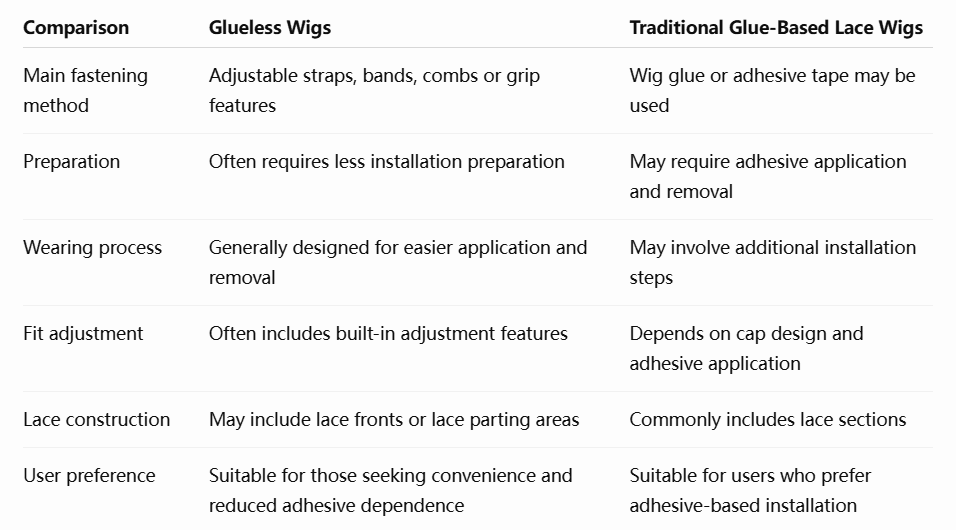
Neither construction is automatically better for every customer. The appropriate choice depends on fit, styling preferences, product design and intended use.
5. What Are the Advantages of Glueless Wigs?
Glueless wigs offer several practical features that may appeal to different customer groups.
5.1 Easier Daily Application
Because the product is designed to stay in place through built-in securing features, users may not need to apply adhesive every time they wear it.
This can simplify the daily wearing process.
5.2 More Convenient Removal
Many glueless designs can be removed without going through the adhesive removal process.
This may be useful for customers who prefer to take off their wigs at the end of the day.
5.3 Adjustable Fit
Internal straps and elastic bands provide additional adjustment options.
This can help accommodate differences in head size, although adjustment features do not replace accurate cap sizing.
5.4 Flexible Product Selection
Glueless construction can be combined with different hair materials, textures, lengths and lace configurations.
For manufacturers and wholesalers, this creates opportunities to develop different product collections for various customer preferences.
5.5 Reduced Dependence on Adhesive Products
Some consumers prefer not to use wig glue or tape as part of their regular wearing routine.
Glueless designs offer an alternative, although the level of security depends on the fit and construction of the individual product.
6. What Should Wholesale Buyers Check When Sourcing Glueless Wigs?
When purchasing glueless wigs in bulk, buyers should evaluate both the visible appearance and the internal construction.
1. Cap Size and Fit
Check the cap measurements and available size options.
An adjustable strap cannot compensate for every sizing problem. The base should still be appropriate for the intended head measurements.
2. Elastic Band Quality
Inspect the band for elasticity, stitching quality and attachment strength.
The band should provide sufficient adjustment without creating excessive pressure.
3. Comb and Clip Placement
Check whether the combs or clips are securely attached and positioned appropriately.
Their placement should support the cap without causing unnecessary pulling or discomfort.
4. Lace Quality
For lace-front designs, inspect the mesh fineness, color, hairline appearance and attachment quality.
Pre-cut lace should also have a clean and consistent edge.
5. Hairline Preparation
If the product is advertised as pre-plucked or pre-bleached, confirm the actual level of preparation through samples.
These terms can represent different levels of customization between manufacturers.
6. Hair Distribution and Styling
Evaluate the overall hair distribution, parting appearance, hair movement and finished hairstyle.
The product should maintain a balanced appearance when worn and styled.
7. Repeat-Order Consistency
For long-term sourcing, confirm that the manufacturer can maintain consistent cap construction, strap placement, lace specifications and overall product appearance across production batches.
7. Questions to Ask Manufacturers Before Bulk Ordering
Before placing a bulk order, buyers should clarify the following details:
- Does the product require any adhesive for its intended wearing method?
- What securing features are included inside the cap?
- Is the elastic band adjustable or removable?
- Are combs or clips included?
- Is the lace pre-cut?
- Is the hairline pre-plucked or are the knots pre-bleached?
- What cap sizes are available?
- Can the manufacturer customize the cap construction?
- Can the same specifications be maintained for repeat orders?
Requesting samples before mass production is a practical way to evaluate fit, construction and overall quality.
8. Final Thoughts
Glueless wigs combine different cap construction features to provide an alternative to traditional adhesive-based installation.
Their performance depends on more than the absence of glue. Cap size, elastic tension, comb placement, lace quality, hairline design and overall construction all influence the final wearing experience.
For B2B buyers, the most effective sourcing approach is to evaluate the complete product rather than focusing only on the term "glueless."
By comparing samples and confirming detailed specifications with manufacturers, wholesalers and brands can select products that better match their target customers and maintain consistency across future orders.