
Global Wig and Hair Extension Market Outlook: Key Trends Shaping the Industry in 2026
The global wig and hair extension industry is evolving as consumer preferences, digital retail channels, and product expectations continue to change. In 2026, market opportunities are increasingly shaped by demand for natural-looking products, convenient application methods, diversified product categories, and more transparent sourcing. This article examines key market trends and explains what wholesalers, importers, retailers, and brands should consider when planning their product strategies and sourcing decisions.
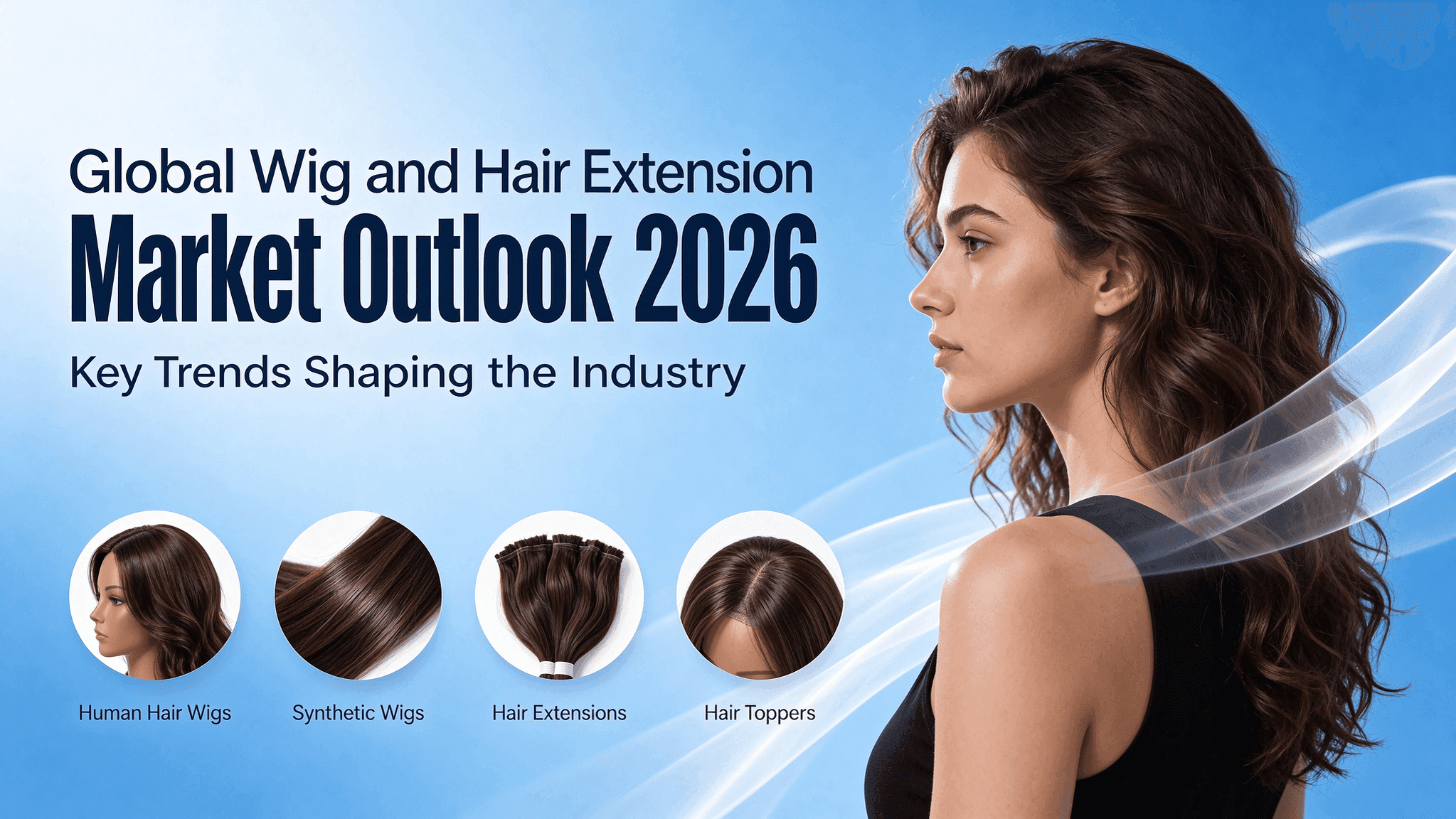
The global wig and hair extension industry is developing beyond traditional beauty retail. Products are now serving a wider range of purposes, including fashion styling, everyday appearance enhancement, hair-loss solutions, and professional salon services.
At the same time, online retail, social media, and changing consumer expectations are influencing how products are designed, marketed, and sourced.
For wholesalers, importers, retailers, and brands, understanding these changes is important when selecting product categories, evaluating suppliers, and planning inventory.
This article examines five trends shaping the industry in 2026 and their potential implications for businesses across the supply chain.
1. Market Growth Remains Positive, but Estimates Vary
Recent market research reports generally point to continued growth in the global wig and hair extension sector. However, their estimates differ considerably because researchers may include different product categories, sales channels, geographic markets, and end-use applications.
For example, Grand View Research estimated the global hair wigs and extensions market at USD 15.2 billion in 2025, with a projected value of USD 16.4 billion in 2026. Mordor Intelligence estimated the 2026 market at approximately USD 13.04 billion.
These figures should not be treated as directly interchangeable. They reflect different research methodologies and market definitions rather than a single universally accepted industry measurement.
For businesses, the more useful takeaway is that the sector continues to attract commercial interest, while growth opportunities vary by product type, region, and distribution channel.
What this means for buyers:
Avoid relying on one global market-size figure when evaluating business opportunities.
Study demand in the specific countries and customer segments you serve.
Track product-level sales and repeat-purchase patterns rather than relying only on broad industry forecasts.
Consider whether your business is positioned in fashion products, hair-loss solutions, professional salon supplies, or a combination of these segments.
2. Natural Appearance and Wearability Are Becoming More Important
Consumers increasingly evaluate hair products by how naturally they look and how comfortably they can be worn.
For wigs, this may involve realistic hairlines, natural-looking partings, suitable cap construction, comfortable fit, and hair movement.
For extensions, buyers may pay attention to how well the added hair blends with natural hair, how securely the product can be installed, and whether the finished look is consistent.
The importance of these features also depends on the target market. A consumer purchasing a wig for occasional styling may prioritize appearance and affordability, while someone looking for everyday wear may place greater emphasis on comfort, durability, and maintenance.
What this means for buyers:
Evaluate products on actual wearability, not just product photographs.
Request videos showing hair movement, hairline details, and the finished appearance.
Check cap construction, attachment methods, and comfort-related details.
Compare the product's performance after washing and styling where relevant.
A product that looks attractive in a promotional image may not necessarily meet customers' expectations in everyday use.
3. Online Retail Is Changing Product Discovery and Purchasing
E-commerce and social media have become important channels for discovering wigs and hair extensions.
Product demonstrations, influencer content, customer reviews, and short-form videos allow consumers to explore products before making a purchase. This has also created opportunities for smaller brands and specialized retailers to reach international customers.
However, selling hair products online presents specific challenges. Customers cannot physically inspect hair texture, color, cap construction, or product weight before ordering.
As a result, product presentation and information accuracy are especially important.
Businesses selling online may benefit from providing:
Clear photographs from multiple angles.
Videos showing natural movement and texture.
Accurate descriptions of hair material and construction.
Consistent color references and length information.
Clear explanations of installation, care, and maintenance.
Transparent return and after-sales policies.
For wholesalers and manufacturers, this shift means that product information is becoming part of the purchasing decision. Suppliers that can provide consistent product images, videos, specifications, and packaging information may be easier for overseas brands and retailers to work with.
4. Product Diversification Is Creating More Specialized Opportunities
The industry is not limited to traditional full wigs. Different customer needs have encouraged the development and wider distribution of more specialized products.
Examples include:
Full wigs: Used for fashion, everyday styling, and hair-loss coverage.
Hair toppers: Designed to provide coverage or additional volume in selected areas of the scalp.
Toupees and hairpieces: Often developed for customers seeking partial hair replacement.
Hair extensions: Available in formats such as clip-in, tape-in, sew-in, and other installation systems.
Synthetic and blended hair products: Offering different price points and styling characteristics.
Professional hair accessories: Supporting installation, maintenance, and salon services.
This diversification creates opportunities for businesses to serve more specific customer groups instead of competing only through price.
For example, a retailer specializing in hair toppers may have different purchasing requirements from a beauty supply distributor focused on bulk hair extensions. Similarly, a professional salon may prioritize installation systems and product consistency, while an online retailer may need a wider range of colors and ready-to-ship styles.
What this means for buyers:
A clear product strategy is becoming increasingly important. Instead of purchasing a broad assortment without a defined target, businesses can identify their main customer groups and select products that match their needs, price expectations, and preferred purchasing channels.
5. Supplier Evaluation Is Becoming More Comprehensive
As the market becomes more competitive, price alone may not be enough to determine whether a supplier is suitable.
Overseas buyers need to consider product consistency, communication, production capacity, customization options, delivery arrangements, and quality control.
This is particularly important for human hair products, where differences in raw materials, processing, sorting, and manufacturing can affect the finished product.
A structured supplier evaluation can include the following areas:
Evaluation Area | What Buyers Should Check |
|---|---|
Product consistency | Whether samples and bulk orders match in texture, color, length, and construction |
Material information | Whether the supplier clearly explains the hair type and material composition |
Manufacturing capability | Whether the factory can handle the required product types and order quantities |
Customization | Available options for colors, lengths, cap construction, packaging, and branding |
Quality control | Whether inspection procedures are defined and applied consistently |
Communication | Whether specifications, production updates, and after-sales issues are handled clearly |
Delivery | Whether production lead times, packaging, and shipping arrangements meet the buyer's requirements |
For buyers sourcing from overseas manufacturers, requesting samples and confirming written specifications before placing larger orders can help reduce misunderstandings.
What Should Wholesale Buyers Watch in 2027?
Looking ahead, businesses may benefit from monitoring several areas:
1. Product segmentation
Identify which categories are most relevant to your customers, such as full wigs, hair toppers, toupees, extensions, or professional hair accessories.
2. Price and quality positioning
Determine whether your target customers prioritize affordability, premium materials, convenience, or a balance of these factors.
3. Digital product presentation
Invest in accurate product photographs, demonstration videos, and detailed specifications to support online sales.
4. Supplier reliability
Build relationships with suppliers who can provide consistent products, clear communication, and dependable production arrangements.
5. Regional customer preferences
Do not assume that one product assortment will work equally well in every market. Hair textures, preferred styles, price expectations, and purchasing habits can differ between countries and customer groups.
Conclusion
The wig and hair extension industry in 2026 is shaped by more than overall market growth. Changes in consumer expectations, online purchasing behavior, product specialization, and supplier evaluation are influencing how businesses compete.
For wholesalers, importers, retailers, and brands, the opportunity lies in understanding their target customers and building a product assortment that meets specific market needs.
A stronger sourcing strategy should combine product knowledge, sample evaluation, supplier communication, and a clear understanding of the final sales channel. Businesses that pay attention to these factors will be better positioned to respond to changing demand and develop sustainable commercial relationships.